
Dimraeth damage types: what scales with what
Every damage number in Dimraeth sits on one of two sides. Strike, thrust and blunt are physical and rise with physical power, which Strength and Agility feed. Fire, ice, electricity, decay and ether are magic and rise with magic power, which Intelligence and Charisma feed. A spell that looks magical but lists blunt damage still wants Strength or Agility, and Adventure is the one attribute that pushes both sides.
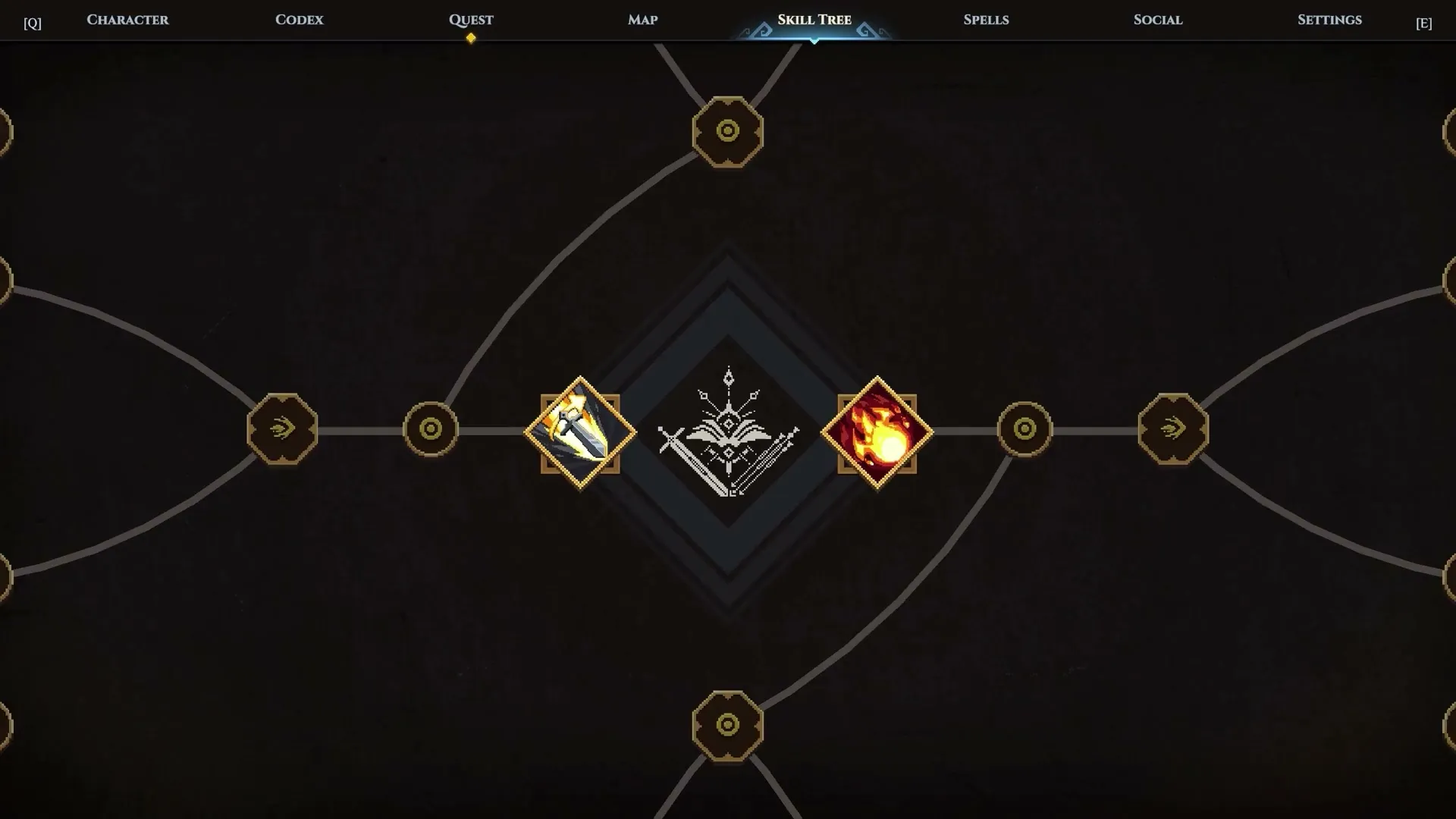
The two sides, and what sits on each
A spell’s animation does not decide its scaling; the listed damage type does. A spell that looks like magic but deals blunt damage scales with Strength or Agility, not Intelligence.
Strike, thrust, blunt
- Raised by Strength and Agility
- Bleeding is counted here too
- Leans on stamina to cast
You do not have to chase each type separately: a physical damage increase affects all three.
Fire, ice, electricity, decay, ether
- Raised by Intelligence and Charisma
- Decay and ether are magic, not physical
- Leans on concentration to cast
The Intelligence and Charisma descriptions name these five elements themselves.
Spells split the same way. A thrust-only spell is physical; Plague Shards deals decay, which is magic. Some spells carry both, such as one with thrust and ice damage, which suits a mage-assassin build and needs points on both sides. Where the spells come from is on Dimraeth spells and spellbooks.
Ether, the Elf’s damage type, is magic. The attribute text lists it among the types magic power raises, so build Intelligence and Charisma for it.
Which attribute raises which damage
| Attribute | What it raises | Which types that covers | Notes |
|---|---|---|---|
| Strength | Physical power | Strike, thrust, blunt | The main physical attribute |
| Agility | Physical power, the second physical attribute | Strike, thrust, blunt | Raise this or Strength for a spell that deals blunt damage |
| Intelligence | Magic power | Fire, ice, electricity, decay, ether | The main caster attribute |
| Charisma | Magic power, the second magic attribute | Fire, ice, electricity, decay, ether | Its description lists the same five elements as Intelligence |
| Adventure | Physical power and magic power | Both sides at once | Worth considering for a hybrid, such as a Human Mage |
Memory, Physique and Energy do not appear in the damage descriptions, but they still matter: spell books gate on them. What each attribute otherwise does, and the level cap, are on Dimraeth leveling and attributes.
What your left-click actually swings
The game does not show your basic attack’s damage type anywhere obvious. It scales with physical damage. A forum moderator puts it by race: Elves deal thrust, Humans and Minotaurs deal strike, and Minotaurs can convert theirs to blunt. One player puts it by weapon: a Human sword deals strike and a Human crossbow deals thrust, so trust the weapon line when you are holding a crossbow.
| Race | Weapon | Reported type | How firm |
|---|---|---|---|
| Human | Sword | Strike | Firm: reports agree |
| Human | Crossbow | Thrust | Firm: reports agree |
| Minotaur | Battle axe | Strike, convertible to blunt | Firm: a Minotaur Brawler skill converts it to blunt |
| Elf | Twin daggers | Thrust, on one account only | Soft: inferred from the Elf’s thrust skills |
Treat the Elf row as the soft one until you check your own tooltip. Which weapons each race is locked to is on Dimraeth races and race-locked weapons.
Some players say pierce where the game says thrust. The word on the tooltips is thrust.
Check it yourself, in six moves
These are the places in your own game that answer it for your character, in the order worth using them.
- Open the Codex and look up the element
The Codex explains what each element scales off. The poison entry, for example, says physical or magic damage, whichever is higher.
- Inside the Codex, open stacking effects for the debuffs
Stacking effects lists every effect in the game: bleeding, burning, chill and the rest. Read it before you commit points to a damage-over-time plan.
- Read the damage lines on the spell itself
A spell names its types, and a spell can carry two. Nothing about its animation tells you which side it scales on.
- Use the cost as a second opinion
The more physical a spell is, the more stamina it tends to use. A spell drawing mostly concentration is leaning magic. Which bar pays for what is on Dimraeth combat, stamina and concentration.
- Hover the attributes where you buy them
Each stat on the trainer page explains what it does. That is where the five magic elements above are listed.
- Open the advanced tab for your own two numbers
To see what a point is actually worth to you, open the advanced tab of your character page. It also shows your stamina and concentration values.
A caveat on step three: some skill descriptions are wrong, for example listing thrust damage for a skill that deals strike. When a tooltip and the Codex disagree, trust the Codex.
Bleed, poison, burn and decay
Damage over time is where the two-sided rule bends, and the attribute screen says nothing about it. Use this table instead.
| Effect | Scales with | Notes |
|---|---|---|
| Bleeding | Physical power | Counted on the physical side |
| Poison | Physical or magic power, whichever is higher | Stated in the Codex poison entry |
| Decay | Magic power | Listed in the magic attribute text |
| Burning | Check the Codex | Fire is on the magic list; open the burn stack’s Codex entry for the stack itself |
Because bleeding is physical and poison takes the higher of the two, a physical build that converts bleed into poison keeps scaling the poison from physical power. Combine the bleed on Brawler skills with the conversion-to-poison keystones. Humans can also apply poison with the crossbow, and Elves can detonate DoTs with Temporal Spike. The Human crossbow path has plenty of bleed damage nodes, and the Shadow tree has a couple of nodes that increase poison damage. Where those nodes sit is on the Dimraeth skill tree.
Resistance: what enemies and gear do back
Gear rolls resistances as well as damage. A fully upgraded item can carry strike armour, decay resistance, spell haste, ice resistance and thrust armour. Armour against a physical type and resistance against a magic one are both possible rolls, so an item can also roll a bonus for a type you are not using, such as a blunt modifier on a thrust set. Slots, sets and upgrades are on Dimraeth equipment and armor.
Enemies resist too. One Shadow player estimates that 50% of monsters in later areas are decay resistant, the corrupted treant among them, and that poison DoTs are too slow for the final fight. If you build around decay or poison, carry a second damage type for the fights that shrug the first one off.
What this changes about a build
Specialise, but not exclusively: you can focus one damage type, but you want a broad spread of skills. Three common routes show what committing to one side looks like.
- Physical, strike into bleed. A Minotaur strike, bleed and rage build, picking skills that deal strike damage and add bleed.
- Physical, blunt. Blunt skills are generally seen as tank tools, such as an AoE shock wave that deals blunt damage.
- Magic, burn into a detonator. Elf Magician is commonly used to apply burn stacks and blow them up for extra damage with Temporal Spike.
The tree is not evenly split. The Human has two physical damage branches; the Elf has one ether damage branch. A mixed race and class pairing, such as Minotaur Mage, inherits that imbalance and ends up a blunt and fire hybrid whether you want one or not. Full builds, with their attribute plans, are on Dimraeth builds.
Still unanswered
The Elf basic attack type is still unconfirmed, so treat that row as soft. Whether gear can convert a basic attack from one type to another is open too; the only known conversion is the Minotaur’s skill-tree one. Until then, the Codex in your own save is the authority.