
Dimraeth crafting, cooking and alchemy
Crafting starts with the quest Learning to Build, which unlocks blueprints for a workbench, an alchemy station and a storage chest. The workbench comes first: loot the planks it needs, then make your own nails from stone and planks from pinewood. After that, cooking keeps your max health, concentration and stamina from dropping, the alchemy table adds potion charges, and the blacksmith salvages gear you do not want.
The first blueprints: Learning to Build
Faustas gives you the quest right after the Lost Caverns (the full route is on the Dimraeth walkthrough): build your first dwelling and learn the basics of cooking. Finishing it unlocks the blueprints for your workbench, alchemy station and storage chest.
You cannot build any of them on the spot, because they need planks and nails. Prioritise the workbench: it is what makes more of both.
Getting planks and nails before the workbench
Where each kind of plank comes from, Heart Oak included, is on Dimraeth planks.
- Loot them in the farmlands
Enemies can drop them, but the most reliable sources are chests, tree trunks and especially corpses scattered around the world. A tip on exactly where is on the Dimraeth Sanctum page.
- Keep going on the main quest if you are short
Players short on planks report getting them after travelling to town, taking the main quest and going through the woods. In a multiplayer lobby with personal loot off, drops are harder to find; the loot settings are on Dimraeth co-op.
- Build the workbench in the Sanctum, then craft your own
Craft nails from stone and planks from pinewood. Nails are heavy to carry around, at five each.
- Heart oak planks come later
Players find Heart Oak planks in the northern woods, after the first boss. Heart Oak Mill and Pinewood Mill also appear under Production in the build menu in Mudtek’s trailer.
Recipes seen so far
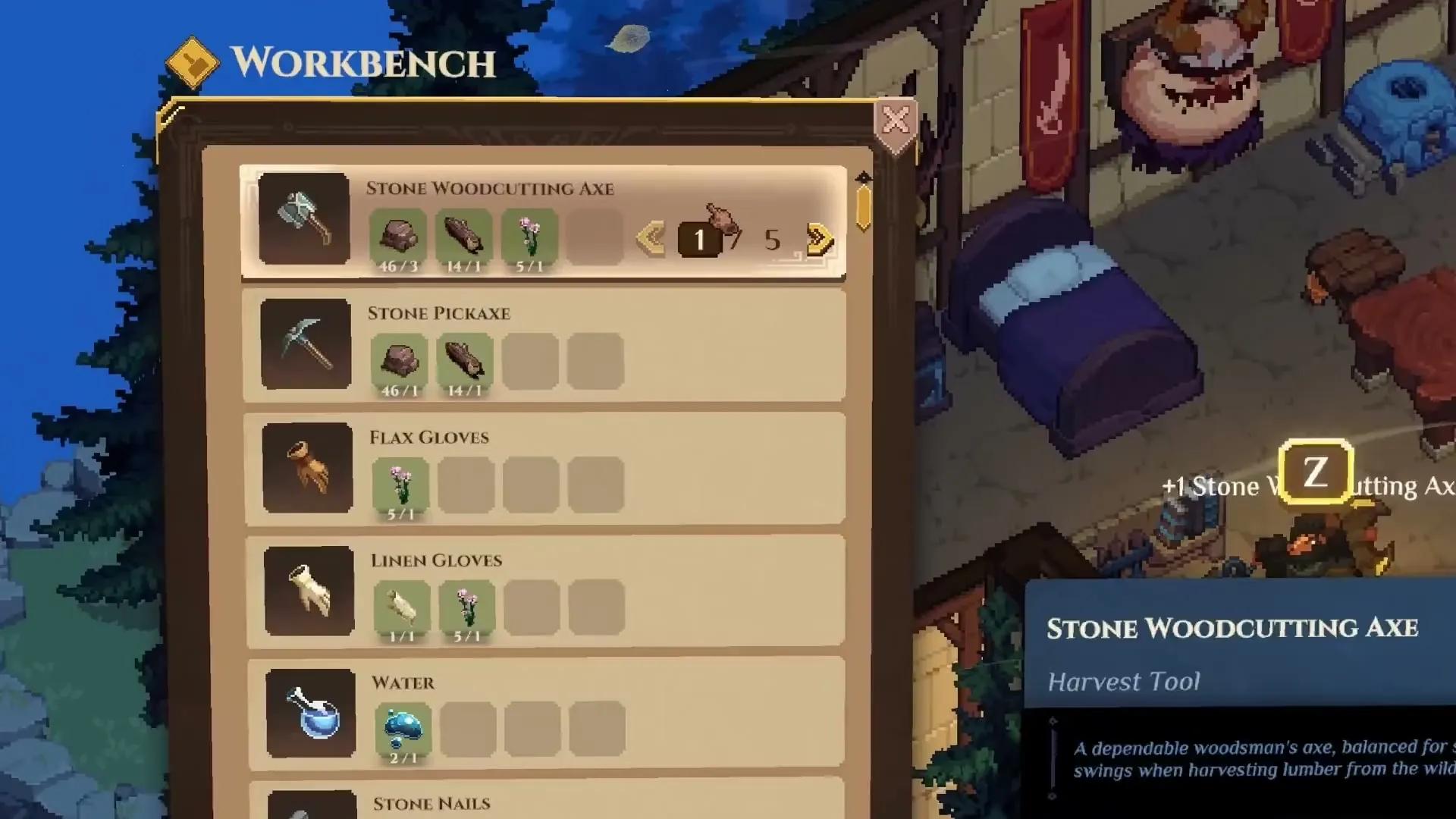
These recipes appear in the trailer’s workbench menu or have been crafted in Early Access; the trailer may show a slightly older build.
| Item | Station | Made from |
|---|---|---|
| Stone Nails | Workbench | Stone |
| Pinewood Planks | Workbench | Pinewood |
| Stone Woodcutting Axe | Workbench | Three ingredients (tooltip: Harvest Tool) |
| Stone Pickaxe | Workbench | Two ingredients, one of them stone |
| Flax Gloves | Workbench | One ingredient |
| Linen Gloves | Workbench | Two ingredients |
| Water | Workbench | One ingredient |
| Roasted droop core | Campfire | Droop core |
| Better health potions | Alchemy table | Not shown |
Do not craft the axe, pickaxe and gloves yet. You need an axe and a pickaxe to farm stone and pinewood, and gloves to gather the higher grade plants you come across while exploring, but Rahaner gives all three away for free shortly after The Time Tardy Scout.
You can also find recipes by experimenting. Mudtek’s Game Director Phillip: “Crafting can be done directly from your backpack, or through dedicated crafting stations.” In the crafting slots, “if your inputs match a valid recipe, you can craft the item and unlock that recipe at the same time”. Gear itself is not crafted; the plan for that is on Dimraeth endgame.
- MacGyvered It Craft an item for the first time90.9%
- Tinkerer Upgrade a combat item for the first time53.5%
- Permanent Edge Upgrade a combat item to its maximum level26.8%
Cooking and nourishment
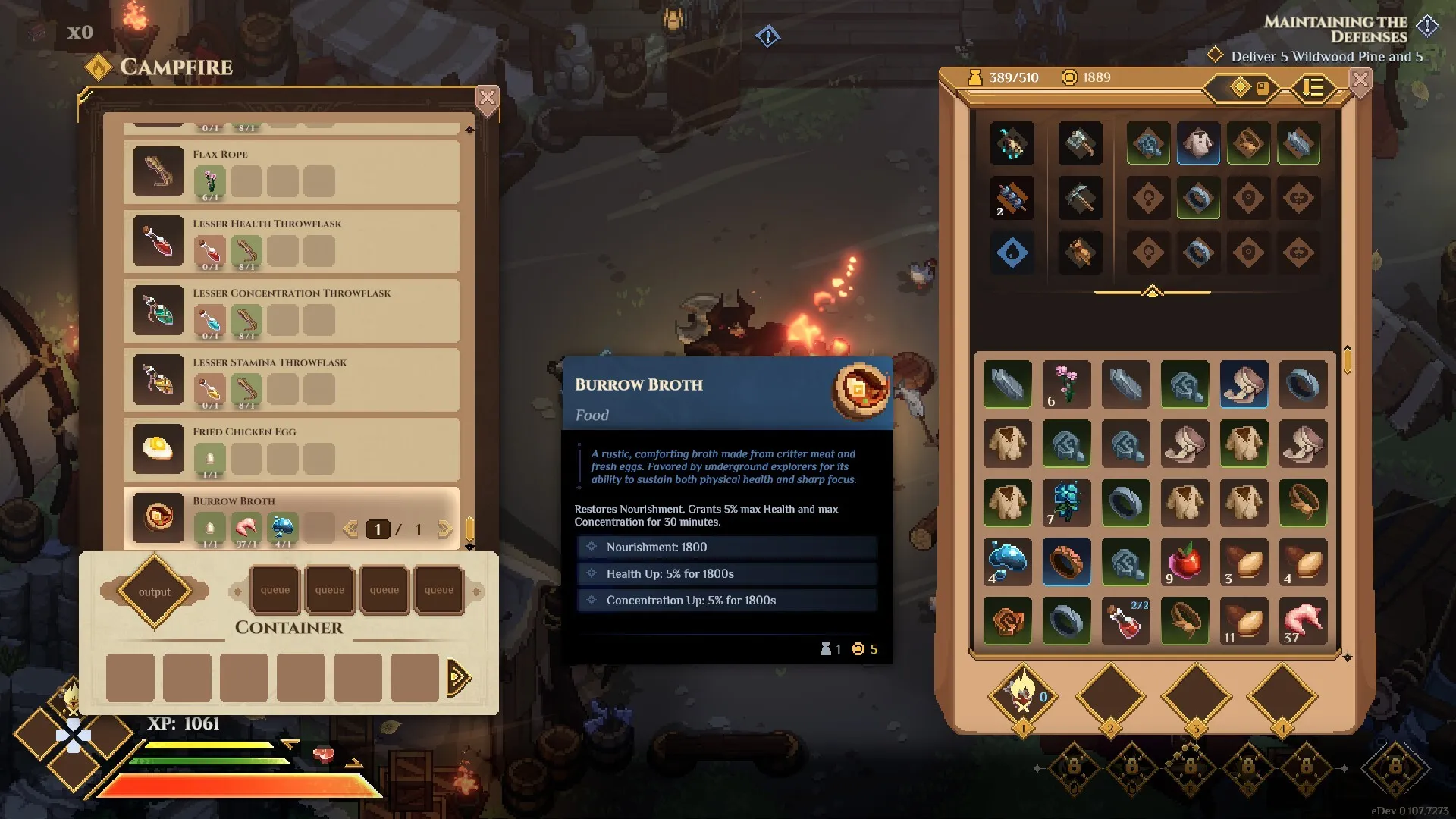
Learning to Build teaches cooking with one recipe: build a campfire and cook a droop core. Keep eating after that, or your maximum health, concentration and stamina will decrease.
Any food will do
“Hunger and thirst are basic needs, and any cooked food can keep you satiated”. Growing crops takes care of it. For bosses, equip stat food: you can pick it up and do not need to cook it.
Timed stat boosts
Food can raise max health, concentration, stamina, regeneration and resistances, and buffs last around 30 minutes on average. Water is a workbench recipe. What concentration and stamina do in a fight is on Dimraeth combat.
Food and water go into three quick slots.
Where seeds come from
Seeds are not a workbench recipe. You get them now and then when gathering plants out in the world, such as apple seeds from dropped apples. The drop rate is low; players guess 5–10%. Gather everything on the way past rather than counting on a set number of plants. The plots those seeds go into are on the Dimraeth Sanctum page.
Alchemy table and potion charges
You start with two HP potions. Upgrading your combat items (Cures, Potions, Knives) at the crafting benches raises how many you can use between rests at a campfire; potions upgrade at the alchemy table. Potions refill when you rest, so what you craft is more charges, not a stockpile. The other half of carrying more into a fight is weight, on Dimraeth inventory and encumbrance, and what the charges are spent on is on Dimraeth combat.
If the bench only offers to make another one, that is the upgrade: making more of the same adds one charge, up to 7, players report.
- Build the alchemy table early so you can start crafting better health potions.
- Offensive consumables (throwing knives, flasks) upgrade to multiple charges the same way. Even at five charges, one fight can use them all.
- One of each: you cannot put more than one of the same item on the hot bar, and no upgrade lets you equip two offensive tools at once.
- Dying does not refill them, although enemies respawn. Rest at a campfire instead.
How many charges the starter health flask can reach, and the berries it takes, are in the Dimraeth beginner guide.
Salvage at the blacksmith
Unwanted gear is a crafting material. Choose one set that fits your play style and salvage the rest at the blacksmith: you need a lot of salvage materials for upgrades anyway. The blacksmith is Manga (see Dimraeth NPCs), and what the salvage buys at the forge is on Dimraeth equipment.
Chests: auto-deposit and their own build tab
A chest button automatically deposits matching items into your storage chests, gear sets included: once a chest holds at least one piece of a set, matching pieces from that set go into it. Give each set its own chest and put one piece in first.
A hotfix gave chests a tab of their own: “Fixes storage chests to have their own tab”. Guides that send you to the Furniture tab may be out of date. Chest sizes, the guild hall chest and the rest of storage are on the Dimraeth Sanctum page.
- Tools of the Trade Build your first crafting station52.1%
- Workshop Build a Workbench, an Alchemy Table and a Woodfire Stove12.7%