
Dimraeth combat: stamina, concentration and resting
In Dimraeth, stamina (the top bar) pays for attacks, dodges, blocks, sprinting in a fight and physical spells, and it comes back when you stop attacking for a moment. Concentration (the middle bar) pays for magic spells and comes back only when your basic attacks land. Potions and other combat items do not come back on their own: rest at a campfire to refill them, which also brings the monsters back.
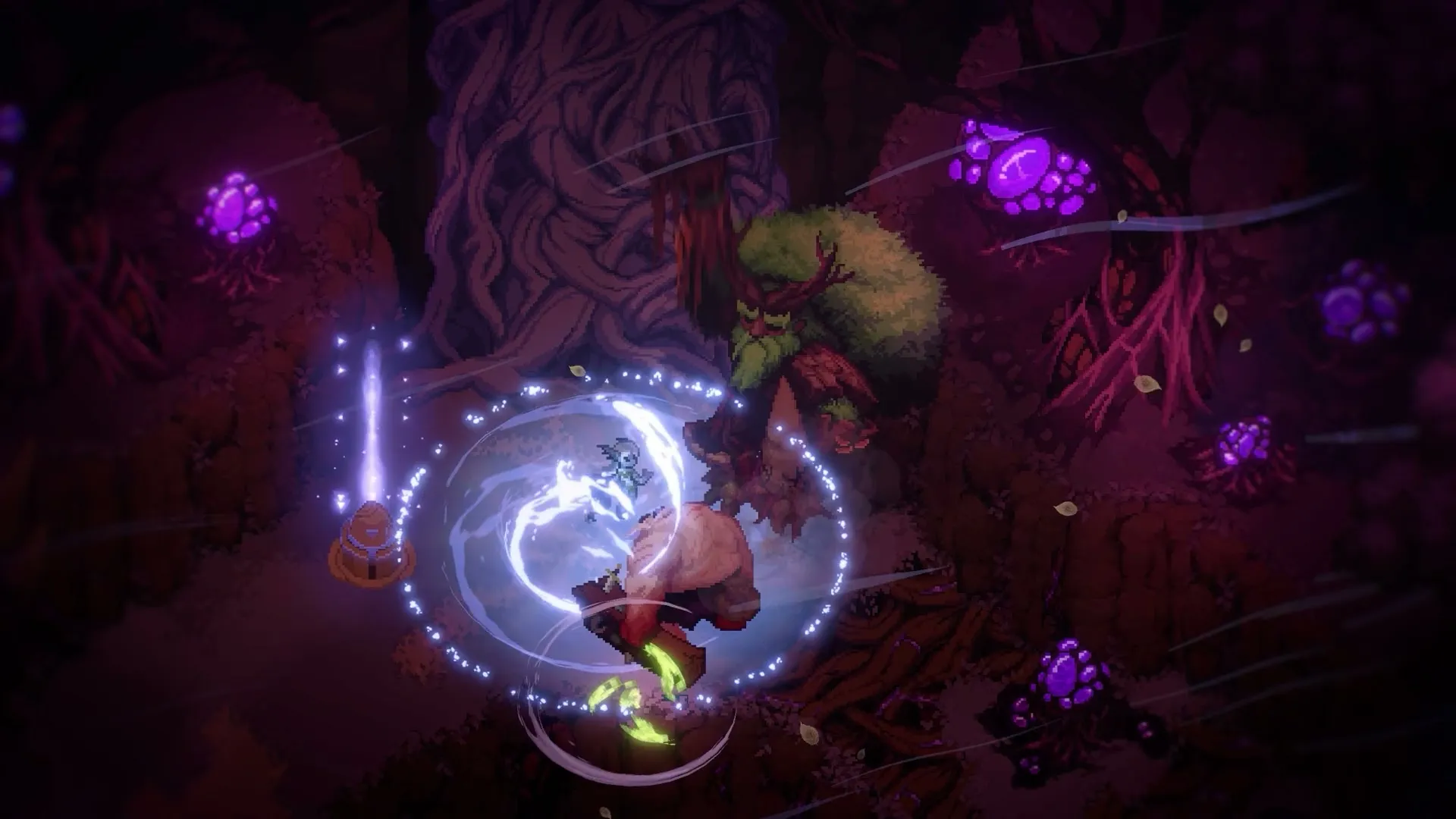
What spends each bar, and what refills it
| Bar | Spent by | Refilled by |
|---|---|---|
| Stamina (top bar) | Attacks, dodges, blocking, sprinting in combat, and physical spells | Taking a break from attacking; stamina potions |
| Concentration (middle bar) | Magic spells | Basic attacks that hit an enemy; mana-restoring flasks |
| Health | Hits you take | Health potions in the fight; a full heal when you rest at a campfire |
| Combat items (potion and tool charges) | Each use of a potion or offensive tool | Resting at a campfire, not dying |
Stamina is the top bar and concentration (MP) is the middle one. For the exact numbers, open your character menu and look under Advanced.
Stamina: attacks, dodges and blocks draw on it
“Manage your stamina, read enemy telegraphs, and position yourself before choosing to strike, dodge, block, or parry.”
Mudtek
Dodging, blocking, casting and striking all spend stamina, so every choice in a fight has a cost. Sprinting only counts in a fight: out of combat it is free.
How to get it back mid-fight
Stamina recovers when you take a break from attacking, and it refills quickly once you stop spending it.
- Stop swinging and walk
Moving normally still lets it return; sprinting, dodging and blocking spend it again.
- Watch for a failed block
Before calling it a bug, check whether you were blocking or had failed a block.
- If it never moves, report it
Stamina that stays at zero is a bug. Where to report it is on Dimraeth bugs and fixes.
Players disagree on how much that helps. Some find concentration plentiful and stamina slow to regenerate, especially while you are using it; melee players report being out of stamina so often that most of their abilities are unavailable. Some archetypes gain stamina per attribute point; which ones is on Dimraeth races.
Concentration: only hits refill it
If your middle bar keeps dropping, you are probably casting abilities without basic attacks in between. Only basic attacks that hit an enemy refill it: “Hitting enemies with basic attacks, (left click on WASD Keyboard controls or X/Square on controller) is what regens your concentration.”
So a caster’s rotation is basic attacks between spells, not spells back to back. Every race has its own combo chain of 3-4 hits, which sets the rhythm. Mana-restoring flasks also refill it, and you can carry more of them as you go. Which button is the basic attack on each control scheme is on Dimraeth controls.
Which bar a spell uses
Every spell lists its cost; one spellbook spell needs eight concentration and 15 stamina per cast. As a rule, pure magic spells cost only concentration and the more physical spells cost only stamina. The Human’s Weapon Swap is reportedly in the stamina group. A melee build that runs out of stamina therefore loses its spells too. Reading a spell’s cost icons and where to get more spells is on Dimraeth spells and spellbooks.
Guard, parry and Perfect Vanish
Every character has a standard dash and a race-specific guard, each with its own cooldown. The guard works on spells as well as weapons: you can parry enemy magic. Timing it matters most against enemies that open with a lunge; which ones those are, and when to stop parrying and move instead, is on Dimraeth enemies: wolf packs and dryads.
Shadow skill nodes that trigger on a “perfect vanish” mean a perfectly timed Elf guard. Vanish is the Elvish defensive skill; time it perfectly and instead of raising a shield your character teleports behind the enemy. It is well worth using against the first boss. Some players call the same thing the perfect parry, and the Minotaur tree has it under another name, retaliation. The nodes that use it are on the Dimraeth skill tree.
What “final attack” means in a skill
The phrase appears in a charged strike’s tooltip, which describes the strike interrupting the enemy’s attack and then initiating a final attack. Read that way, a final attack is a follow-up hit the strike sets off, not a killing blow.
Switching weapon sets
On the Human, sword and crossbow share one character. Press Q to switch weapon sets. The switch is a spell, Weapon Swap, that you can move on the spell bar or change in the tree, so Q is likely just its default slot. How each race’s weapons work is on Dimraeth races.
Five spells at a time
“Equip five spells at a time and build tactical rotations and combinations around your loadout.”
Mudtek
You will have many spells to choose from and only five slots, so choosing the set is the strategic decision. Recorded five-spell loadouts per class are on Dimraeth builds.
Potions and tools during a fight
Health, concentration and stamina can all be recovered quickly with potions, but how many you carry is limited:
- Starting potions: you start with two HP potions. An alchemy table raises how many you can use between rests at a campfire.
- Charges, not single items: consumables with charges work like they do in Soulslike games.
- One offensive tool: upgrading it adds charges (one player has 5 after several upgrades), but players know of no upgrade that lets you equip more than one offensive item.
- No bag in a fight: in some fights the game blocks healing and inventory access. Set up your consumables before you engage.
The alchemy table is where potion counts go up; recipes are on Dimraeth crafting and cooking.
Resting at a campfire: what it resets
Resting at a campfire refills potions and other combat items and heals you fully, but everything you cleared comes back. The game tells you so when you rest: “You’ve rested. Monsters reappear.”
Campfires are also where you spend XP; that side is on Dimraeth leveling, and where the fires are is on the Dimraeth map.
Food and water shape the bars
Eat and drink regularly. The Learning to Build quest, which teaches cooking, spells out the cost of skipping it: “If you don’t, your maximum health, concentration, and stamina will decrease.”
Cooked meals also go the other way: food can raise max health, concentration and stamina, boost regeneration, and add elemental resistances, and a food buff lasts around 30 minutes on average. Food is your long-duration baseline; potions are burst sustain. Eat before a boss, drink potions during it. The bosses worth preparing for are on Dimraeth bosses, and meal recipes on Dimraeth crafting and cooking.
On controller: closing a conversation makes you dash
On controller, dash shares the confirm button, so leaving a conversation with confirm makes you dash. A fix is planned:
“I have it noted to patch. Not high priority atm, but it will get fixed.”
Swapping the dash and interact buttons can leave you reopening the same conversation; leave it with the mouse instead. Sprint and dash sharing a key is covered on Dimraeth controls and controller.